

The Scale Is One Data Point. Just One.
Right. We need to talk about the scales.
Specifically, we need to talk about the hold they have over so many of us and why that number — that single, context-free number — does not mean what we think it means.
I'm not going to tell you to throw your scales away. Some people find them a useful tool, and that's completely valid. What I am going to do is give you some context. Because without context, that number has a tendency to ruin your entire morning.
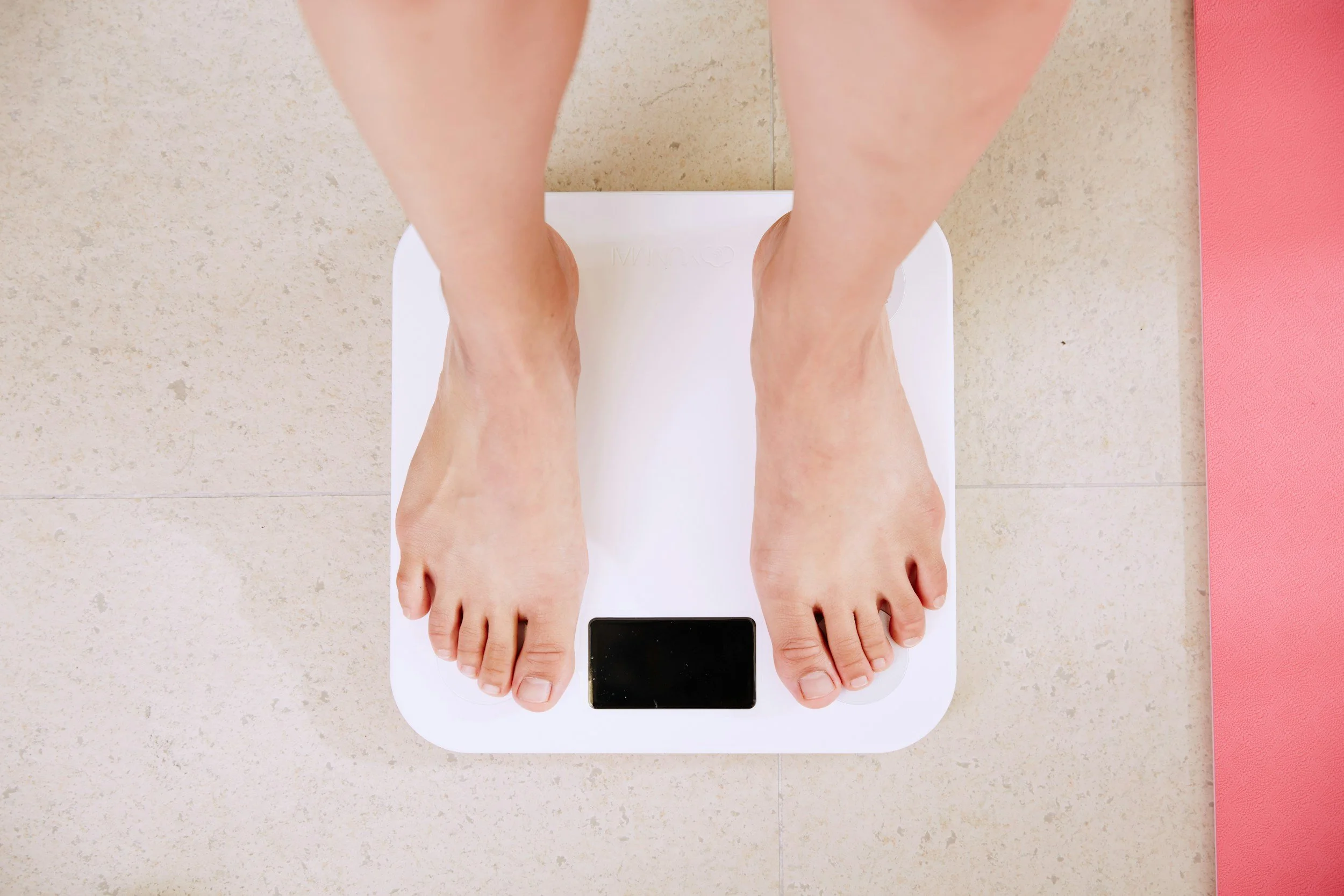
What your weight actually reflects
Your body weight at any given moment is a snapshot of so many things that have nothing to do with your fat mass — which is, I assume, what most people are actually concerned about when they step on the scales.
It reflects:
How much water you drank yesterday.
Where you are in your menstrual cycle (water retention around ovulation and before your period is very real — we're talking 1 to 3kg for some women).
How much salt you ate.
Whether you've been to the bathroom yet.
How much sleep you got.
Whether you trained yesterday (muscle holds glycogen and water after exercise).
Stress levels — high cortisol = more water retention.
None of those things are fat. All of them will move the number on the scales. Which means that weighing yourself once, on a random day, at a random time, and making judgements about your progress based on that? Is a bit like checking the weather app once in November and deciding what to pack for your summer holiday.
The data points that actually matter
If you want to track progress — and there is absolutely nothing wrong with wanting to track progress — here are the metrics I'd encourage you to pay attention to alongside or instead of the scales:
How your clothes fit.
Your energy levels throughout the day.
How you're sleeping.
How you feel when you train — are you getting stronger? Moving better?
Your mood and mental clarity.
Whether you're recovering well between sessions.
These are not soft, unmeasurable things. These are real, meaningful indicators of how your body is doing. And in my experience, when all of these are heading in the right direction, the rest follows.
If you are going to weigh yourself
Then do it properly. Same day each week. Same time — first thing in the morning, before eating or drinking, after going to the bathroom. Track it over several weeks, not one-to-one. Look at the trend, not the individual number.
And please, please do not weigh yourself after a holiday, after a big weekend, after a very salty dinner, or on day 25 of your cycle. You will not like what you see and it will not be telling you the truth.
You are more than a number. You always were. But you also deserve accurate information — and one decontextualised number on a Tuesday morning is rarely that.
Yours in whole health,
Emma x