
Your Core Is Not What You Think It Is
Can we talk about the word 'core' for a second?
Because if I had a euro for every time someone told me they wanted to 'work on their core' and then pointed vaguely at their stomach, I could retire to somewhere warm with a very good wine list.
I'm not laughing at you — I genuinely promise. I'm laughing because I was exactly the same. For years I equated core strength with flat abs and crunches. It wasn't until I started looking into the actual anatomy of what the core is and does that everything clicked. And once it clicks, you can't unlearn it.
So what actually is the core?
Your core is not your six-pack muscles. Well, it's not only that. Your core is a canister — a whole cylinder of muscles working together to support your spine, manage pressure in your abdomen, and keep you stable in everything you do.
Think of it like this: top of the canister is your diaphragm (yes, the muscle you breathe with). Bottom is your pelvic floor. The sides are your deep abdominals — particularly the transverse abdominis — and your multifidus muscles along the spine.
These muscles work together. When your system is functioning well, every time you breathe, lift, walk, sneeze, laugh, or pick up your shopping bags, they coordinate automatically to keep you stable and protected.
Crunches, by the way, largely just work the superficial muscles on the outside of that canister. Which is fine, but it's not the whole picture — not by a long stretch.
Why this matters more than you might think
A poorly functioning core shows up in ways that have nothing to do with how your stomach looks. It shows up as lower back pain. As that feeling of instability when you try to lift something heavy. As leaking when you sneeze or jump. As a feeling of heaviness or pressure in your pelvis.
None of these things are inevitable. None of them are things you simply have to put up with. But they won't be fixed by doing 50 sit-ups either.
The magic is in understanding how to connect to those deeper muscles — how to breathe properly, how to manage intra-abdominal pressure, how to build real strength from the inside out. And once you do? The knock-on effects are significant. Better posture. Less back pain. More strength in your lifts. More confidence in your body.
Where to start
If this is all new to you, start with your breath. Seriously — your breath is the entry point to your deep core. Try this:
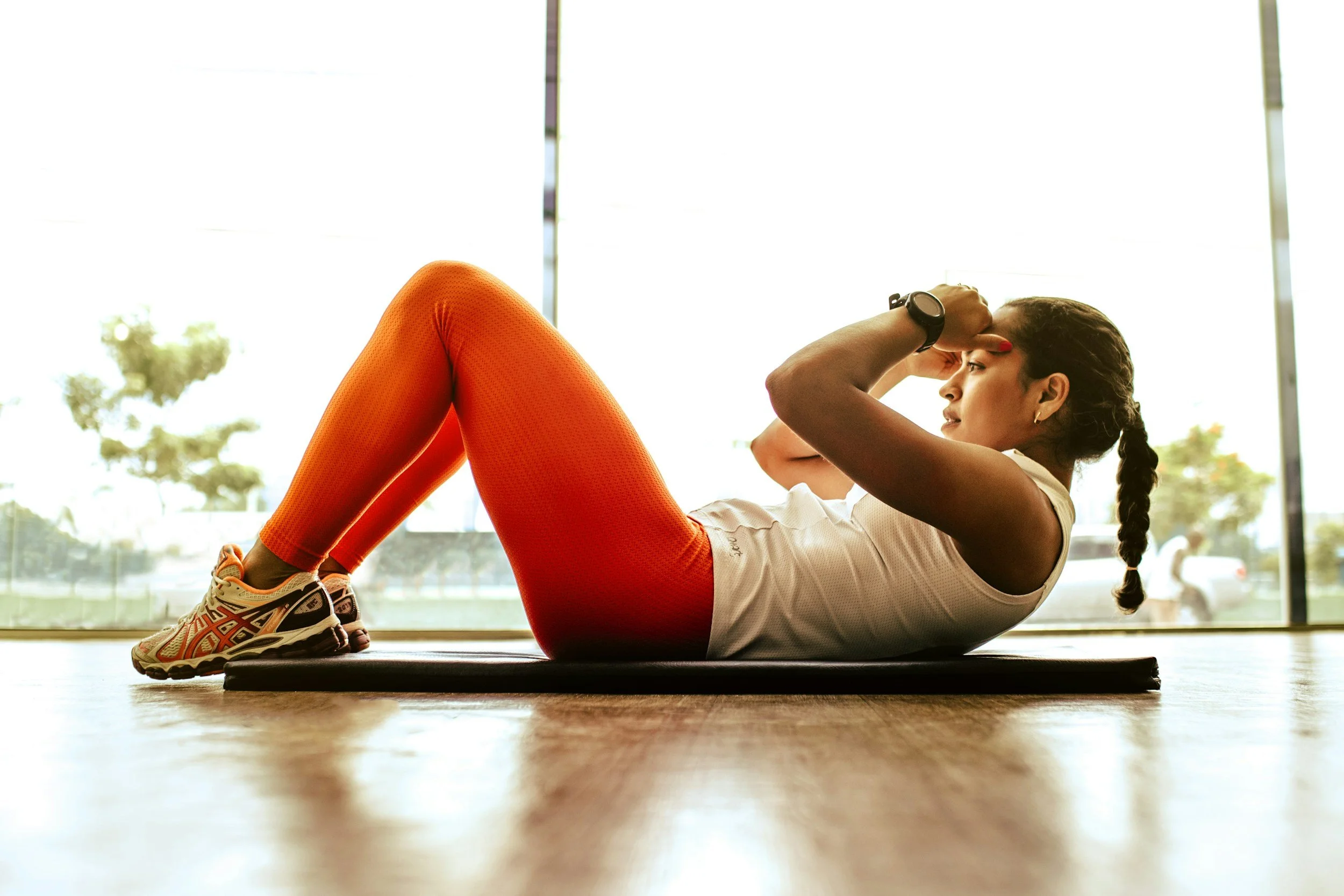
Lie on your back with your knees bent.
Breathe in through your nose. Let your belly rise, your ribs expand, and feel your pelvic floor gently lower.
Breathe out through your mouth. Feel your pelvic floor gently lift, your lower abs softly draw in.
Do this for 5 breaths. That's it. That's your starting point.
It sounds too simple. I know. But this breath-core connection is the foundation that everything else is built on. Get this right, and everything else — every squat, every deadlift, every plank — gets better.
Your core has been working hard for you your whole life. It's time to give it the attention it deserves.
Yours in whole health,
Emma x